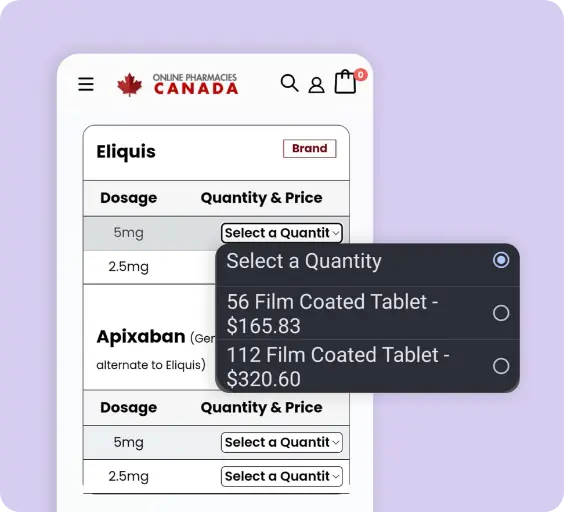
* This price includes a dispensing fee, medical review fee, and packing fee.
Shipped and delivered directly to your doorstep
Urecholine contains the active ingredient bethanechol. It is a prescription medication used to help people who have difficulty emptying their bladder.
Urecholine is used to treat certain types of urinary retention, especially when the bladder muscle is weak and does not contract normally.
This can happen with bladder atony, a condition in which the bladder has difficulty squeezing urine out.
Urecholine may help improve bladder emptying and make it easier to urinate.
Urecholine may also be used to treat urinary retention after surgery.
Some people have trouble urinating after anesthesia or a surgical procedure because the bladder temporarily does not contract as well as it normally does.
Urecholine can help stimulate the bladder muscle and restore urination.
Urecholine belongs to a group of medications called cholinergic agonists.
It works by acting like a natural chemical in the body called acetylcholine.
This stimulates muscarinic receptors in the bladder.
When these receptors are activated, the bladder muscle contracts more strongly.
This helps push urine out of the bladder and can make urination easier.
Urecholine is most useful when urinary retention is caused by a weak bladder muscle.
It should not be used when urine flow is blocked by a physical obstruction, such as certain urinary tract blockages, because forcing the bladder to contract against an obstruction can be harmful.
Your healthcare provider will determine whether Urecholine is appropriate based on the cause of your urinary retention.
Urecholine is taken by mouth, usually 3 or 4 times daily, exactly as prescribed by your healthcare provider.
Try to take each dose at about the same times every day.
Urecholine should preferably be taken 1 hour before or 2 hours after a meal.
Taking it on an empty stomach can help reduce nausea and vomiting.
The dose of Urecholine depends on the cause and severity of your urinary retention and how well you respond to treatment.
Usual adult dose: 10 to 50 mg taken 3 or 4 times daily.
Your healthcare provider may start with a lower dose and adjust it until the smallest effective dose is found.
Do not increase your dose or take Urecholine more often than prescribed.
The effects of bethanechol may begin within about 30 minutes after a dose.
Its strongest effect usually occurs within 60 to 90 minutes.
Take Urecholine exactly as prescribed and follow the dosing schedule provided by your healthcare provider.
Do not stop, increase, or decrease your dose without medical advice.
If you miss a dose of Urecholine, take it when you remember unless it is almost time for your next scheduled dose.
If your next dose is approaching, skip the missed dose and continue with your regular schedule.
Do not take two doses at the same time to make up for a missed dose.
Your healthcare provider will choose your dose based on your symptoms, medical history, and response to treatment.
Contact your healthcare provider if you continue to have difficulty urinating, your symptoms worsen, or you develop troublesome side effects.
Urecholine (Bethanecol) is available in the following forms and strength:
Urecholine can tighten the airways and may cause wheezing or bronchospasm.
Tell your healthcare provider if you have asthma, chronic lung disease, or another breathing condition before starting treatment.
Seek medical attention if you develop significant wheezing, chest tightness, or difficulty breathing.
Urecholine can affect heart rate and blood pressure.
Tell your healthcare provider if you have:
Your healthcare provider may decide that Urecholine is not appropriate or may monitor you more closely.
Urecholine can lower blood pressure and may cause dizziness, weakness, or fainting.
The risk may be higher if you already have low blood pressure or take medications that lower blood pressure.
Stand up slowly from a sitting or lying position.
Urecholine increases activity in the digestive tract.
Tell your healthcare provider if you have:
Urecholine should not be used when increased intestinal movement could be harmful.
Urecholine should not be used when urinary retention is caused by a physical blockage.
Stimulating the bladder to contract against an obstruction can make the problem worse.
Your healthcare provider will usually determine the cause of your urinary retention before prescribing Urecholine.
Urecholine can interact with other medications that affect acetylcholine, blood pressure, heart rate, or digestive function.
These may include:
Tell your healthcare provider about all prescription medications, over-the-counter products, vitamins, supplements, and herbal products you use.
Urecholine can cause gastrointestinal side effects such as:
Taking Urecholine on an empty stomach may help reduce nausea and vomiting.
Contact your healthcare provider if these effects become severe or persistent.
Urecholine may cause dizziness or lightheadedness, especially if your blood pressure drops.
Avoid driving, operating machinery, or doing other activities that require full alertness until you know how the medication affects you.
Taking too much Urecholine can cause excessive stimulation of the nervous system.
Symptoms may include:
Seek prompt medical attention if you develop severe or unusual symptoms after taking Urecholine.
Take Urecholine only as prescribed.
Do not increase your dose or take it more often in an attempt to improve urination faster.
Contact your healthcare provider if your urinary symptoms worsen, you cannot urinate, or you develop severe dizziness, breathing problems, or other concerning side effects.
If you miss a dose of Urecholine, take it as soon as you remember. If it is almost time for your next scheduled dose, skip the missed dose and continue with your regular schedule. Do not take two doses at the same time to make up for a missed dose.
Urecholine usually begins working within about 30 minutes after a dose. Its strongest effect is generally reached within about 60 to 90 minutes. How quickly your urinary symptoms improve can vary depending on the cause of the problem and how your body responds to treatment.
Urecholine may sometimes be used for a longer period if your healthcare provider determines that continued treatment is needed. The length of treatment depends on the cause of your urinary retention and how well the medication is working. Your healthcare provider may periodically reassess your symptoms and treatment plan to make sure Urecholine is still appropriate. Do not continue, stop, or change the dose on your own without speaking with your healthcare provider.
| Generic name: | Bethanecol |
|---|---|
| Formulation: | Tablet |
| Strength(s): | 10mg, 25mg, 50mg |
| Quantities Available: | 100 |
Our online Canadian Pharmacy is known for high standards of quality, safety, and efficiency when it comes to medications.
Our pharmacy offers lower prices on prescription drugs compared to traditional pharmacies.
When ordering Urecholine (bethanechol) from a Canadian pharmacy, you can typically purchase up to a 90-day supply at one time, which is common for prescription medications to ensure adequate management of chronic conditions without frequent refills.
Here’s what you need to know:
Dosage and Quantity: Urecholine is commonly prescribed in dosages of 10 mg, 25 mg, or 50 mg, taken three to four times daily. For example, if prescribed 25 mg four times daily, then for a 90-day supply, you would order 360 tablets (90 days x 4 tablets per day).
Yes, we sell bethanechol on our website. You can enjoy low prices when you order through us. To purchase bethanechol, you will need a valid prescription from your healthcare provider. We require this prescription to dispense the medication safely and appropriately. You have the option to submit your prescription by mailing it to us, faxing it, or uploading it through your online account.
Yes, we ship Urecholine (bethanechol) to both the United States and Puerto Rico.
Online Pharmacies Canada has provided information from third parties intended to increase awareness and does not contain all the information about Urecholine (Bethanecol). Talk to your doctor or other qualified medical practitioners for medical attention or advice, or if you have any concerns about Urecholine (Bethanecol).
REVIEWS