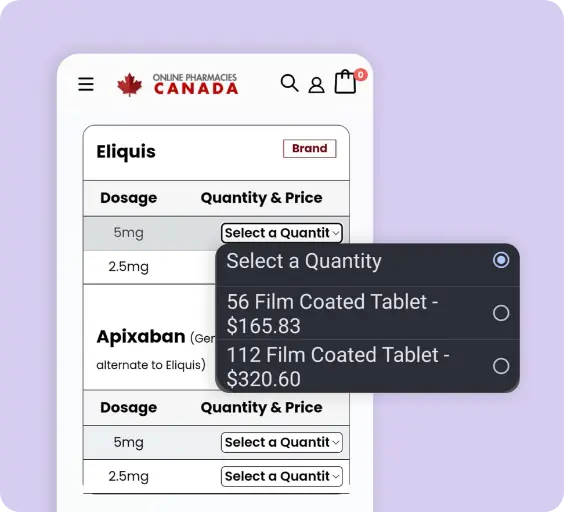
* This price includes a dispensing fee, medical review fee, and packing fee.
Shipped and delivered directly to your doorstep
Razadyne contains the active ingredient galantamine hydrobromide. It is a prescription medication used to treat symptoms of mild to moderate Alzheimer’s disease.
Alzheimer’s disease is a progressive condition that affects memory, thinking, judgment, and the ability to perform everyday activities.
Common symptoms may include:
Razadyne does not cure Alzheimer’s disease or stop it from progressing. However, it may help improve or temporarily stabilize certain symptoms in some patients.
Razadyne belongs to a class of medications called cholinesterase inhibitors.
Galantamine works by slowing the breakdown of acetylcholine, a chemical messenger in the brain that is important for memory, learning, and other cognitive functions.
By increasing the amount of acetylcholine available between nerve cells, Razadyne may help improve communication between brain cells.
In some patients, Razadyne may help with:
The response to treatment can vary from person to person. Some patients may notice improvement, while others may experience a period of more stable symptoms.
Razadyne is used as part of a broader treatment plan for Alzheimer’s disease.
Treatment may also include:
Your healthcare provider may periodically review how well Razadyne is working and whether treatment should be continued.
Razadyne may be used for an extended period if it continues to provide benefit and side effects remain manageable.
It is important to take the medication regularly as prescribed. Do not stop Razadyne or change the dose without speaking with your healthcare provider, because symptoms may worsen if treatment is stopped.
Razadyne is available as a regular-release tablet. It is usually taken twice daily, preferably with the morning and evening meals.
Take Razadyne at about the same times each day. Follow your healthcare provider’s instructions carefully, and do not take more medication or take it more often than prescribed.
Razadyne tablets should preferably be taken with breakfast and the evening meal.
Taking the medication with food may help reduce stomach-related side effects such as nausea and vomiting. Make sure you drink enough fluids during treatment unless your healthcare provider has advised you to limit your fluid intake.
The recommended starting dose of regular-release Razadyne is 4 mg twice daily, for a total of 8 mg per day.
Starting with a lower dose allows your body time to adjust and can help reduce the risk of side effects.
After at least 4 weeks, your healthcare provider may increase the dose to 8 mg twice daily, for a total of 16 mg per day.
If additional benefit is needed and the medication remains well tolerated, the dose may be increased after at least another 4 weeks to 12 mg twice daily, for a total of 24 mg per day.
Dose increases should be based on how well the medication is working and how well you tolerate the previous dose.
Take Razadyne every day as prescribed to receive the most benefit from treatment.
Razadyne may help improve or temporarily stabilize certain symptoms of Alzheimer’s disease, but it does not cure the condition.
Do not change your dose or stop treatment without speaking with your healthcare provider.
If you miss a dose of Razadyne, skip the missed dose and take your next dose at the usual scheduled time.
Do not take two doses at the same time or take extra medication to make up for a missed dose.
If you stop taking Razadyne for more than 3 days, contact your healthcare provider before restarting it.
Treatment should generally be restarted at the lowest dose of 4 mg twice daily and gradually increased again. Restarting at your previous dose after several days without treatment may increase the risk of nausea, vomiting, and other side effects.
Your healthcare provider may adjust your dose if you have liver or kidney problems.
For people with moderate liver impairment or a creatinine clearance of 9 to 59 mL/min, the total daily dose generally should not exceed 16 mg per day.
Razadyne is generally not recommended for people with severe liver impairment or a creatinine clearance below 9 mL/min.
Drink enough fluids while taking Razadyne, especially if you develop nausea, vomiting, or diarrhea.
These side effects can contribute to dehydration. Contact your healthcare provider if they become persistent or severe.
Razadyne (Galantamine HBr) is available in the following forms and strength:
Do not take Razadyne if you are allergic to galantamine hydrobromide or any ingredient in the tablets.
Seek medical attention if you develop signs of a serious allergic reaction, such as hives, swelling of the face or throat, or difficulty breathing.
Rare but serious skin reactions have been reported with galantamine.
Stop taking Razadyne and contact your healthcare provider promptly if you develop a new skin rash, especially if it is accompanied by blistering, peeling, sores, or fever.
Razadyne can slow the heart rate and affect the way electrical signals travel through the heart.
This may increase the risk of:
Tell your healthcare provider if you have heart disease, an abnormal heart rhythm, or a history of fainting.
Razadyne can increase stomach acid production.
Tell your healthcare provider if you have a history of stomach ulcers or gastrointestinal bleeding, especially if you regularly take nonsteroidal anti-inflammatory drugs (NSAIDs), such as ibuprofen or naproxen.
Seek medical attention if you notice black or bloody stools, vomit that contains blood, or severe stomach pain.
Razadyne commonly causes gastrointestinal side effects, particularly when treatment is started or the dose is increased.
These may include:
Your healthcare provider may monitor your weight during treatment. Drink enough fluids, especially if vomiting or diarrhea occurs.
Cholinesterase inhibitors such as galantamine may have the potential to cause seizures.
Tell your healthcare provider if you have a history of seizures or epilepsy. Seek medical attention if you experience a seizure while taking Razadyne.
Use Razadyne with caution if you have severe asthma, chronic obstructive pulmonary disease (COPD), or another obstructive lung condition.
Galantamine may affect the airways and could worsen breathing symptoms in some patients. Contact your healthcare provider if wheezing or breathing problems become worse.
Galantamine may make it more difficult to empty the bladder in some people.
Tell your healthcare provider if you have difficulty urinating, an enlarged prostate, or another condition that affects urine flow.
Tell your healthcare provider if you have liver or kidney disease.
These conditions can affect how galantamine is removed from the body. Your dose may need to be reduced, and Razadyne may not be appropriate for people with severe liver or kidney impairment.
Razadyne can interact with other medications.
Important interactions may occur with:
Tell your healthcare provider about all prescription medications, over-the-counter products, vitamins, supplements, and herbal products you use.
Tell your surgeon or anesthesiologist that you take Razadyne before having surgery.
Galantamine may increase the effects of certain medications used to relax muscles during anesthesia.
Razadyne may cause dizziness or fainting, particularly when treatment begins or the dose is increased.
Use caution when driving, operating machinery, or performing activities that require alertness until you know how the medication affects you.
Tell your healthcare provider if you are pregnant or planning to become pregnant before taking Razadyne.
Your healthcare provider can determine whether the potential benefits of treatment outweigh the possible risks.
No. Razadyne does not cure Alzheimer’s disease or stop it from progressing. It may help improve or temporarily stabilize symptoms such as memory, thinking, attention, and the ability to perform daily activities in some people with mild to moderate Alzheimer’s disease.
Razadyne does not usually produce an immediate noticeable effect. It may take several weeks before you or your caregiver notice changes in memory, thinking, or daily functioning. Continue taking Razadyne exactly as prescribed, even if you do not notice an improvement right away. Your healthcare provider may need several weeks or months to determine how well the medication is working.
Razadyne is approved for the treatment of mild to moderate dementia of the Alzheimer’s type. Its safety and effectiveness for severe Alzheimer’s dementia have not been established in the same way. Your healthcare provider will determine whether another treatment approach is more appropriate if the disease has progressed beyond the mild to moderate stage.
Tell your healthcare provider if you are pregnant, planning to become pregnant, or breastfeeding before taking Razadyne. Available prescribing information states that galantamine may pose a risk during pregnancy based on animal studies. There are also no adequate data showing whether galantamine passes into human breast milk or how it might affect a nursing infant. Your healthcare provider can help weigh the potential benefits and risks of treatment.
Yes. Regular-release Razadyne tablets should preferably be taken with food, usually with the morning and evening meals. Taking the medication with food may help reduce nausea, vomiting, and other stomach-related side effects. Adequate fluid intake is also recommended during treatment.
Razadyne may be used cautiously in some people with liver or kidney impairment, but the dose may need to be reduced. For patients with moderate liver impairment or a creatinine clearance of 9 to 59 mL/min, the total daily dose generally should not exceed 16 mg per day. Razadyne is generally not recommended for people with severe liver impairment or a creatinine clearance below 9 mL/min. Your healthcare provider may monitor your condition and adjust the dose as needed.
| Generic name: | Galantamine HBr |
|---|---|
| Formulation: | Regular Release Tablet |
| Strength(s): | 4mg, 8mg |
| Quantities Available: | 100 |
Our online Canadian Pharmacy is known for high standards of quality, safety, and efficiency when it comes to medications.
Our pharmacy offers lower prices on prescription drugs compared to traditional pharmacies.
When ordering Razadyne (galantamine HBr) from a Canadian pharmacy, you can typically purchase up to a 90-day supply at one time, which is common for prescription medications to ensure adequate management of chronic conditions without frequent refills.
Here’s what you need to know:
Dosage and Quantity: Razadyne is commonly prescribed in dosages of 4 mg or 8 mg, taken twice daily. For a 90-day supply, this means you would order 180 tablets (90 days x 2 tablets per day).
Yes, we sell galantamine HBr on our website. You can enjoy low prices when you order through us. To purchase galantamine HBr, you will need a valid prescription from your healthcare provider. We require this prescription to dispense the medication safely and appropriately. You have the option to submit your prescription by mailing it to us, faxing it, or uploading it through your online account.
Yes, we ship Razadyne (galantamine HBr) to both the United States and Puerto Rico.
Online Pharmacies Canada has provided information from third parties intended to increase awareness and does not contain all the information about Razadyne (Galantamine HBr). Talk to your doctor or other qualified medical practitioners for medical attention or advice, or if you have any concerns about Razadyne (Galantamine HBr).
REVIEWS