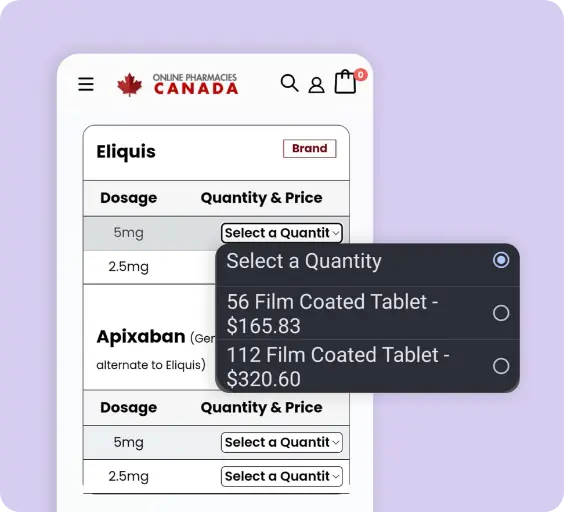
* This price includes a dispensing fee, medical review fee, and packing fee.
Shipped and delivered directly to your doorstep
Epivir contains the active ingredient lamivudine. It is a prescription antiviral medication used to treat certain viral infections, including HIV-1 infection and chronic hepatitis B virus (HBV) infection.
Lamivudine does not remove these viruses from the body completely. Instead, it helps slow down their ability to multiply, which can reduce the amount of virus in the body and help prevent further damage.
Epivir is used as part of combination antiretroviral therapy for HIV-1 infection. This means it is taken together with other HIV medications rather than used by itself.
HIV attacks important immune cells, especially CD4 cells, which help the body fight infections. If HIV continues to multiply without treatment, it can gradually weaken the immune system.
By helping reduce the amount of HIV in the blood, Epivir can support immune system function and help keep the infection under better control.
Epivir may be prescribed for adults and pediatric patients who weigh at least 2 kg, depending on the formulation and dose recommended by the healthcare provider.
Children usually need doses based on their body weight, so dosing should always be carefully determined by a healthcare provider.
Lamivudine is also used to treat chronic hepatitis B, a long-term infection caused by the hepatitis B virus.
HBV mainly affects the liver. When the virus remains active for a long time, it can cause ongoing inflammation and may eventually lead to serious liver problems.
Lamivudine helps reduce HBV replication, which can lower the amount of virus in the body and help reduce ongoing liver injury.
Lamivudine may be used for adults and pediatric patients 2 years of age and older with chronic hepatitis B, depending on the specific product and treatment plan.
It is important to understand that the dose used for hepatitis B is not the same as the dose used for HIV. Patients should never switch between lamivudine products or doses without guidance from a healthcare provider.
Epivir belongs to a group of antiviral medications called nucleoside reverse transcriptase inhibitors, or NRTIs.
Viruses such as HIV and HBV need to copy their genetic material in order to multiply. Lamivudine enters infected cells and interferes with this copying process.
Once inside the body, lamivudine is changed into an active form that becomes incorporated into newly forming viral DNA.
When this happens, the virus is unable to continue building its genetic material properly. This interrupts the replication process and makes it harder for the virus to produce new copies of itself.
In HIV treatment, Epivir helps lower the viral load, which is the amount of HIV present in the blood.
When viral load is reduced and treatment is taken consistently, the immune system has a better chance to remain strong and function normally.
Epivir works best when taken together with the other antiretroviral medications prescribed by your healthcare provider.
For chronic hepatitis B, lamivudine helps reduce the amount of HBV circulating in the body.
Lowering viral replication can help decrease stress on the liver and may improve certain measures of liver inflammation.
However, treatment does not always eliminate HBV completely, and the virus may become active again if treatment is stopped.
Epivir does not cure HIV or chronic hepatitis B.
For HIV, treatment is usually long-term and is intended to keep the virus suppressed.
For hepatitis B, treatment helps control viral activity and reduce the risk of continued liver damage, but ongoing monitoring may still be needed.
Epivir should be taken consistently and exactly as prescribed. Missing doses can allow the virus to multiply again and may increase the risk of drug resistance, which means the medication may become less effective.
Regular follow-up appointments and laboratory tests help your healthcare provider monitor how well treatment is working and whether any adjustments are needed.
Epivir is taken by mouth and is available as a tablet or oral solution. Depending on your treatment plan, it may be taken once or twice a day.
You can take Epivir with or without food. If the medication upsets your stomach, taking it with food may make it easier to tolerate.
Try to take Epivir at approximately the same time every day. If you take it twice daily, space the doses according to the schedule provided by your healthcare provider.
Keeping a consistent schedule helps maintain a steady amount of lamivudine in your body. This is particularly important when Epivir is being used as part of combination treatment for HIV.
If you have difficulty swallowing tablets, ask your healthcare provider or pharmacist about using the oral solution.
In some cases, the tablet may be crushed and mixed with a small amount of soft food or liquid immediately before taking it. If you are advised to do this, take the entire mixture right away so you receive the complete dose.
Do not prepare a crushed-tablet mixture ahead of time or save it for later.
For adults being treated for HIV-1 infection, the usual recommended Epivir dose is 300 mg per day.
This may be taken as 300 mg once daily or 150 mg twice daily, depending on the treatment regimen prescribed by your healthcare provider.
Epivir is used together with other antiretroviral medications for HIV treatment. It should not normally be used as the only HIV medication.
For pediatric patients who weigh at least 25 kg, the recommended HIV dose is generally the same total daily dose used for adults: 300 mg per day.
This may be given as one 300 mg dose each day or divided into two 150 mg doses.
The healthcare provider will determine which schedule is most appropriate based on the child’s treatment plan and ability to take the medication.
For children weighing less than 25 kg, the dose of Epivir is usually based on body weight.
The oral solution may be useful for younger children or patients who need a dose that cannot be easily provided with tablets. The child’s healthcare provider will calculate the correct dose and adjust it as the child’s weight changes.
Lamivudine is removed from the body mainly through the kidneys. If your kidneys are not working normally, the medication may remain in your body longer.
Your healthcare provider may need to reduce the dose or adjust how often you take Epivir if you have reduced kidney function. Kidney function may be checked before or during treatment.
Lamivudine is used for both HIV and chronic hepatitis B, but the products, doses, and treatment plans are not necessarily the same.
Do not switch between an HIV lamivudine product and a hepatitis B lamivudine product on your own. Always use the exact formulation and dose prescribed by your healthcare provider.
Take Epivir consistently, even when you feel well. HIV and chronic hepatitis B can remain active in the body even when you do not have noticeable symptoms.
Frequently missing doses can allow the virus to multiply again. In HIV treatment, inconsistent use may also increase the risk of drug resistance, making the medication less effective.
Do not stop taking Epivir without first talking to your healthcare provider.
This is especially important if you have hepatitis B infection. Stopping lamivudine can sometimes cause hepatitis B to become active again and lead to a worsening of liver inflammation. Your healthcare provider may need to monitor your liver closely if treatment is stopped.
If you miss a dose, take it when you remember unless it is almost time for your next scheduled dose.
If your next dose is approaching, skip the missed dose and return to your normal schedule. Do not take two doses at the same time to make up for a missed dose.
For the best results, take Epivir exactly as prescribed, at consistent times, and together with the other medications in your treatment plan.
Do not change your dose or stop treatment on your own. Regular use helps keep viral replication under control and reduces the chance that treatment will become less effective.
Epivir (Lamivudine) is available in the following forms and strength:
Epivir can interact with certain medications. These may include interferon alfa, ribavirin, and zalcitabine, as well as other drugs that may affect how lamivudine works.
Before starting Epivir, tell your healthcare provider about all prescription medications, over-the-counter medicines, vitamins, and supplements you are taking.
Epivir may cause side effects such as headache, nausea, tiredness, and diarrhea.
These effects are often mild, but contact your healthcare provider if they become severe, persistent, or difficult to manage.
Tell your healthcare provider if you have liver disease or a history of liver problems before taking Epivir.
Lamivudine can sometimes affect the liver, and people with existing liver conditions may need closer monitoring during treatment. Seek medical advice if you develop symptoms such as yellowing of the skin or eyes, dark urine, severe abdominal pain, or unusual fatigue.
Epivir may rarely cause pancreatitis, which is inflammation of the pancreas.
Contact your healthcare provider right away if you develop severe or persistent upper abdominal pain, especially if the pain spreads to your back or occurs with nausea or vomiting.
In rare cases, Epivir and other nucleoside reverse transcriptase inhibitors can cause lactic acidosis, a serious buildup of lactic acid in the blood.
Seek medical attention if you develop unusual weakness, severe tiredness, difficulty breathing, persistent nausea or vomiting, abdominal discomfort, or other unusual symptoms.
If you are pregnant or planning to become pregnant, tell your healthcare provider before taking Epivir.
Your healthcare provider will consider the benefits of controlling the viral infection and any potential risks before deciding on the most appropriate treatment during pregnancy.
Tell your healthcare provider if you are breastfeeding or planning to breastfeed.
Lamivudine can pass into breast milk. Your healthcare provider will consider your infection, treatment plan, and the potential risks and benefits when advising you about breastfeeding while taking Epivir.
If you are pregnant, planning to become pregnant, or breastfeeding, talk to your healthcare provider before taking Epivir. Lamivudine has been used during pregnancy, including as part of HIV treatment. Your healthcare provider will consider the benefits of controlling the infection and any potential risks before deciding whether Epivir is appropriate for you. Lamivudine can also pass into breast milk. Your healthcare provider can advise you about breastfeeding based on your infection, treatment plan, and individual situation.
Yes. Epivir can interact with certain medications, so it is important to tell your healthcare provider about all prescription drugs, over-the-counter medicines, vitamins, and supplements you take. Medicines that may require special consideration include interferon alfa, ribavirin, and zalcitabine. Some combinations may increase the risk of side effects or may not be recommended. Do not start, stop, or change another medication while taking Epivir without first checking with your healthcare provider.
| Generic name: | Lamivudine |
|---|---|
| Formulation: | Film Coated Tablet, Tablet, Tablets |
| Strength(s): | 150mg, 300mg |
| Quantities Available: | 30, 60, 100, 120 |
Our online Canadian Pharmacy is known for high standards of quality, safety, and efficiency when it comes to medications.
Our pharmacy offers lower prices on prescription drugs compared to traditional pharmacies.
When ordering Epivir (lamivudine) from a Canadian pharmacy, you can typically purchase up to a 90-day supply at one time, which is standard for prescription medications to ensure continuous management of chronic conditions without frequent refills.
Here’s what you need to know:
Dosage and Quantity: Epivir is commonly prescribed in tablets of 150 mg or 300 mg, taken once daily or divided into twice-daily dosing. For example, if you are prescribed 300 mg once daily, for a 90-day supply you would order 90 tablets (90 days x 1 tablet per day).
Yes, we do sell lamivudine on our website. You can enjoy low prices when purchasing lamivudine from us. To proceed with ordering, you will need a valid prescription from your healthcare provider. We require this to dispense the medication safely and legally. You can conveniently submit your prescription by mail, fax, or by uploading it through your online account.
Yes, we ship Epivir (lamivudine) to both the United States and Puerto Rico.
Online Pharmacies Canada has provided information from third parties intended to increase awareness and does not contain all the information about Epivir (Lamivudine). Talk to your doctor or other qualified medical practitioners for medical attention or advice, or if you have any concerns about Epivir (Lamivudine).
REVIEWS